
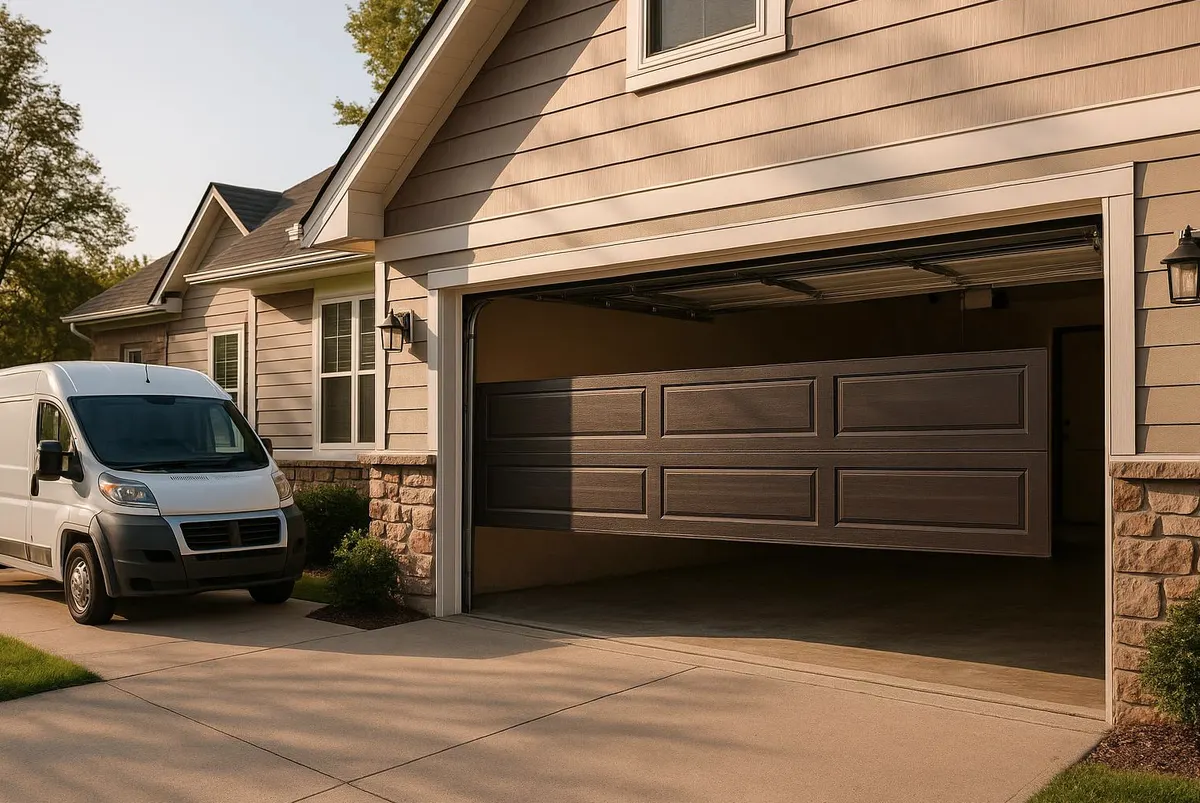
The moment you notice something's off
It usually happens on an ordinary evening. You pull into the driveway, hit the remote, and the door that normally glides up smooth and quiet suddenly sounds like it's working harder than it should — a grinding pop, a slow shudder, or the opener motor straining longer than usual before the door clears the floor. Maybe you try lifting the door by hand and it feels heavier than it did last fall. None of that means the spring is about to snap tonight. But it does mean it's time to walk out to the garage with a flashlight and actually look.
Torsion and extension springs don't usually fail out of nowhere. They wear down gradually, and most of the warning signs are visible or audible if you know where to check. Here's a walk-through checklist you can run in about ten minutes.
Checklist: signs your springs are wearing out
- Visible gaps between coils (torsion springs). Torsion springs sit horizontally above the door on a metal shaft. If you see a gap where the coils have pulled apart, or the spring looks stretched compared to its neighbor, that's metal fatigue setting in. It means the spring is losing tension and won't hold the door's weight much longer.
- Rust or discoloration on the coils. Rust eats into the metal and weakens it from the inside, even if the spring still looks like it's holding shape. In this part of Indiana, winter road salt tracked in on tires and humid summers both speed this up, especially in garages without good ventilation. Surface rust on an otherwise sound spring is a maintenance item; flaking or pitted rust is a replacement sign.
- The door won't stay put when lifted manually. Disconnect the opener (pull the red release cord) and lift the door about halfway by hand. A healthy spring system holds the door roughly in place. If it crashes down or shoots upward, the springs are badly out of balance and close to failing.
- New noises during operation — popping, grinding, or a metallic ping. A sudden loud bang followed by the door refusing to move is often a spring that's already broken. But popping or grinding sounds in the weeks before that are the spring fighting against uneven tension or a damaged coil.
- The opener runs longer or struggles more than it used to. If the motor sounds like it's laboring, or the door opens noticeably slower, the springs aren't carrying their share of the door's weight anymore — the opener is compensating, which shortens its lifespan too.
- Stretching or elongation (extension springs). Extension springs run along the horizontal tracks and stretch and contract as the door moves. Over time they can elongate permanently or develop stretched-out loops at the end. If one side looks noticeably longer than the other, replacement is close.
- Frayed or loose safety cables. Extension springs should have a safety cable running through the center. If that cable looks frayed, kinked, or loose, it's a sign of a stressed spring system and a real safety hazard if the spring lets go.
- The door hangs crooked or closes unevenly. One side dropping faster than the other, or the door looking tilted when it's halfway down, usually means one spring is weaker than its pair — even if neither has fully failed yet.
Why the seasons make this worse here
Clarksville's weather doesn't do springs any favors. Big swings between humid summers and cold, icy winters cause metal to expand and contract repeatedly, which accelerates fatigue in springs that are already near the end of their cycle life. Cold snaps make steel more brittle right when the door gets used more (holiday traffic, cold mornings), which is exactly when a weakened spring is most likely to give out. If your garage isn't insulated, it's also worth checking springs after a stretch of freezing, salty, or wet weather — that's when rust and brittleness show up fastest.
When to call Clarksville Garage Door Experts
If you spot gaps in the coils, visible rust, a door that won't hold its position, or an opener that's clearly straining, stop using the door and call us before it fails on its own. We'll run a full balance and tension check, and if replacement is needed we always replace torsion springs in pairs so the door lifts evenly on both sides — a mismatched spring job is one of the most common causes of early failure. We also offer routine Garage Door Maintenance visits that catch rust, loose cables, and misalignment before they turn into a snapped spring and a door that won't open at all.
If your garage door in Clarksville, IN is sounding rougher, moving slower, or feels heavier than it should, give Clarksville Garage Door Experts a call — we'll inspect it, tell you straight whether it needs maintenance or replacement, and get it fixed right the first time.